MENU

GREEN SKILLS: STORY, LAND, AND PLAY
Overview
Green Skills is a practice-based research project exploring how stories emerge from lived relationships with land, combining creative writing research, ecological storytelling, and participatory game design.
Developed by writer and researcher Jamie Rhodes at UCL, the project sits at the intersection of practice-based PhD research, environmental humanities, and interactive storytelling. It investigates how different cultural, ecological, and spiritual orientations shape not only how we live within landscapes, but how we imagine them. At its centre is the creation of a tabletop role-playing game (TTRPG) story world, developed through fieldwork with tribal women leaders in the Dang region of Gujarat, India.
Rather than treating story as something invented in isolation, the project approaches it as something encountered through attention, labour, and participation. It asks how embodied experience, indigenous knowledge, and ecological relationships give rise to forms of story that cannot be fully accessed through abstract thinking alone.
At its simplest, the project asks:
How does the land become what it is, depending on how we learn to live with it?
The Project
Green Skills unfolds across contrasting environments that frame different relationships with land and survival.
In the Welsh mountains, participation in Wilderness First Responder training reflects an approach shaped by risk awareness, emergency response, and technical skill. Here, landscape is often encountered as something to navigate, manage, and endure. The emphasis falls on preparedness, resilience, and the capacity to respond to rupture.
In western India, the project engages with tribal communities whose knowledge is embedded in sustainable agriculture, forest ecosystems, and cooperative labour practices. In this context, land is not an external challenge but a continuous presence, something lived within rather than overcome. Knowledge is accumulated through repetition, care, and long-term relationship rather than isolated encounters.
The project does not attempt to resolve or simplify these differences. Instead, it moves between them, allowing contrasts in ecological perception, environmental knowledge, and cultural practice to remain visible. Through this movement, it becomes possible to ask how different ways of living with land shape experience of one's own relationship to the land.

The Gamebook
At the heart of the project is the development of a tabletop role-playing game (TTRPG) story world, created as a form of creative practice-based research.
The project does not focus on designing new game mechanics. Instead, it uses existing open-source systems as a framework for exploring worldbuilding as an act of research. The emphasis is on how a world is formed, how it is inhabited, and how players come to understand it through participation.
The resulting gamebook will present a world shaped by:
-
ecological relationships between humans, animals, and land
-
agricultural rhythms and seasonal cycles
-
ethical decisions grounded in care, maintenance, and collective life
-
characters inspired by women leaders in sustainable practices
-
nonhuman presences such as soil, trees, and weather as active forces
Unlike conventional fantasy settings, which often foreground conquest or extraction, this world is structured around continuity, interdependence, and responsibility. It invites players to engage with environmental and social systems not as abstract themes, but as lived conditions.
In doing so, the project explores the potential of interactive storytelling and TTRPG design as tools for engaging with complex questions in sustainability, ecology, and cultural knowledge.

The Documentary
A documentary film accompanies the project as a parallel creative and research output.
The film is not designed as an explanatory account of the work. Instead, it follows the process through which the story world emerges, tracing moments of labour, attention, and encounter. It observes rather than instructs, allowing meaning to arise through duration, rhythm, and proximity.
Moving between Wales and India, the film explores how different environments shape perception. It attends to the textures of everyday activity, the repetition of work, the presence of nonhuman elements, and the gradual shift in how a world is experienced.
The documentary also considers the role of the researcher within this process. Rather than standing outside the material, the film acknowledges participation, uncertainty, and learning as central to the work. It becomes a space in which practice-based research, ethnographic encounter, and creative filmmaking intersect.
Visual elements may include the integration of indigenous art and animation, drawing on indigenous visual language not as decoration, but as an alternative way of representing relationships between people, land, and story.
Philosophical Framework
The project is grounded in a combination of phenomenology, new materialism, and creative writing practice.
Phenomenology, particularly the work of Merleau-Ponty, informs an understanding of perception as embodied and situated. Knowledge is not detached observation but something that arises through the body’s engagement with the world.
New materialist approaches, including those of Barad, Bennett, and Haraway, challenge human-centred perspectives by recognising the agency of nonhuman systems. Land, animals, and materials are not passive backdrops but active participants in the formation of experience.
Green Skills explores how different ecological and cultural contexts give rise to different kinds of story. It asks how environmental knowledge, indigenous practice, and embodied perception shape the possibilities of storytelling itself.
Spiritual and Cultural Dimensions
Alongside its academic framework, the project engages with earth-based spirituality, folklore, and indigenous cosmologies.
The research is informed in part by Jamie Rhodes’ training within a druidic tradition, a contemporary practice rooted in pre-Christian European relationships with land, seasonality, and more-than-human worlds. This perspective is not positioned as equivalent to the traditions encountered in India, but as a parallel practice that encourages attentiveness to how land is understood as meaningful and alive.
During fieldwork, the project encounters the spiritual and cultural practices of tribal communities in Gujarat. These may include relationships to land, ritual practices, and forms of storytelling that are inseparable from daily life. The aim is not to document or extract these practices, but to remain attentive to how they shape perception and experience.
The project also engages with indigenous visual artforms that expresses relationships between humans, animals, and environment through simple but highly structured forms. These art styles inform the TTRPG game book design. In the context of the film, this visual tradition may inform moments of animation or interpretation, offering a way of representing world that operates differently from photographic realism.

India: Dang Region, Gujarat
The fieldwork takes place in the Dang region of Gujarat, in collaboration with local partners and community networks.
This region is characterised by forested landscapes and agricultural communities with long-standing relationships to land and environment. Knowledge is embedded in practices such as farming, resource management, and cooperative labour.
Women play a central role in sustaining these systems. Their leadership is often grounded in practical expertise, continuity of knowledge, and collective organisation. Through collaboration and observation, the project engages with forms of indigenous knowledge, sustainable agriculture, and environmental stewardship that are lived rather than theorised.
The work here is shaped by time, trust, and participation. It unfolds through shared activity rather than structured interviews, allowing understanding to emerge gradually.

Wales: Wilderness Training
The project also includes participation in Wilderness First Responder training in the Welsh mountains.
This environment offers a different set of skills and assumptions. The focus is on risk management, emergency response, and physical endurance, reflecting a context in which landscape is often approached through uncertainty and potential danger.
Training involves learning how to assess situations, respond to injury, and navigate difficult terrain. It emphasises preparedness and individual competence, shaped by traditions that have historically been associated with exploration, survival, and outdoor challenge.
Placed alongside the fieldwork in India, this experience provides a counterpoint. It allows the project to consider how different environments and cultural histories produce different understandings of what it means to live with land.
Team and Collaborators
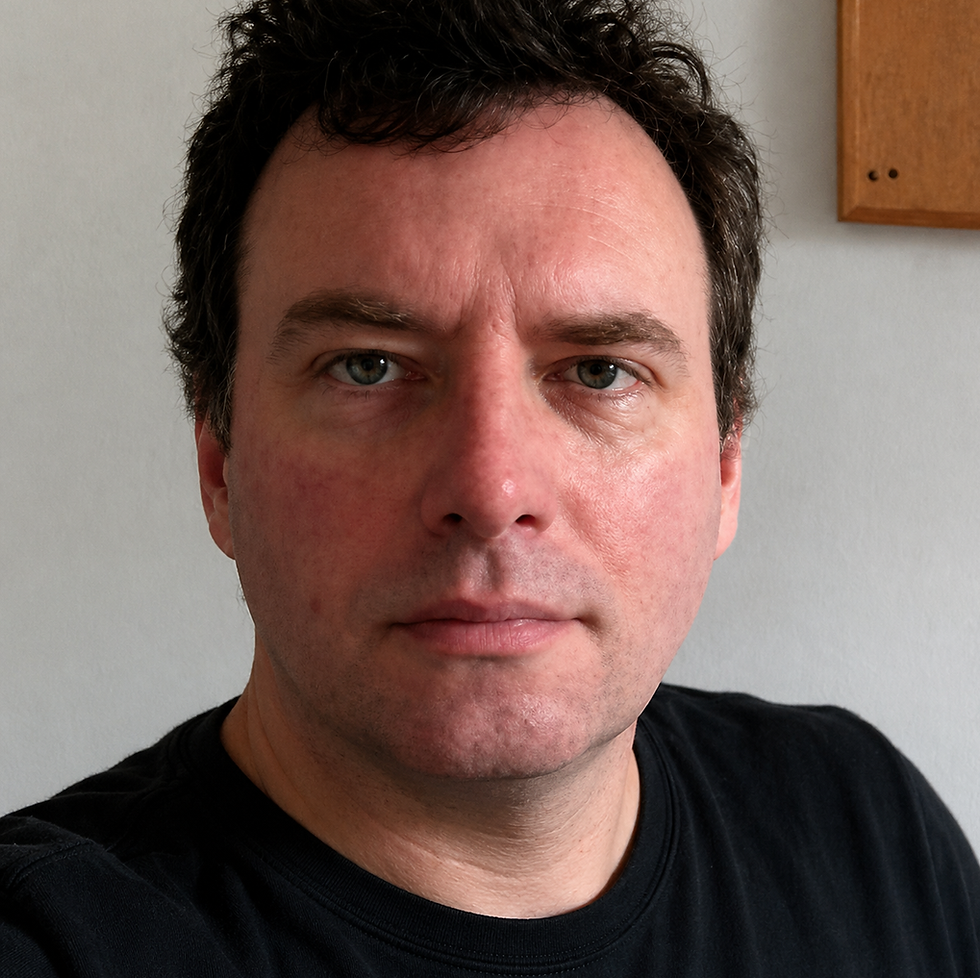
Piers Beckley
Game Design
Consultant
Piers Beckley is a writer and game designer with over thirty years’ experience in tabletop role-playing games. A full member of the Writers’ Guild of Great Britain, his work spans fiction, theatre, television, and interactive storytelling. He has published short fiction across science fiction and horror, with collections including Into The Dark, and is currently developing long-form speculative works. In games, he has contributed narrative design and worldbuilding to major projects across television tie-ins and digital platforms, alongside creating the alternate reality game for the first season of Spooks. His theatre work includes acclaimed adaptations of A Christmas Carol and Oliver Twist. Piers brings deep expertise in narrative systems, player agency, and worldbuilding to the project’s TTRPG development.
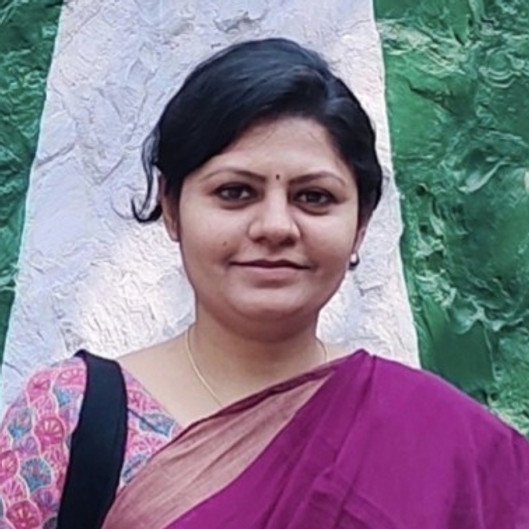
Neha Christie
Co-Principal Investigator –
India
Dr. Neha Christie is an Assistant Professor at the Tata Institute of Social Sciences (TISS), Mumbai, specialising in democratic governance, social capital, and inclusive development. Her research focuses on collective organisation as a pathway to sustainable and community-led change, with particular emphasis on women’s empowerment, leadership, and livelihood resilience. She has conducted extensive studies on cooperatives and Farmer-Producer Organisations, including award-winning research on social capital in Gujarat’s cooperative sector, recognised by the National Cooperative Union of India. Bridging academia and practice, Dr. Christie has led projects in institutional development, grassroots leadership, and policy engagement across the non-profit sector. Her work brings a critical, community-centred perspective to the project, grounding it in participatory approaches and lived realities.

Bhavin Desai
Translator and Community Facilitator
Bhavin Desi is a dairy cooperative and development specialist working at the Valsad District Cooperative Milk Producers’ Union (Vasudhara Dairy). With experience overseeing milk procurement across more than 1,100 cooperative societies and supporting over 80,000 farmers, his work is rooted in strengthening rural livelihoods and community institutions. He leads large-scale development initiatives spanning biogas, silage, and sustainable agricultural practices, while managing multidisciplinary teams and extension services across tribal regions. Bhavin plays a vital role in connecting the project with local communities, facilitating communication, trust, and cultural understanding. His deep engagement with cooperative networks and grassroots systems ensures the project remains grounded in local knowledge and lived experience.

Shravan Pal
Director of Photography – Documentary
Shravan Pal is a cinematographer and Director of Photography specialising in visually rich, story-driven filmmaking. His work spans documentaries, branded content, music videos, and narrative film, with a focus on crafting images that carry emotional and atmospheric depth. Grounded in a strong command of light, composition, and camera movement, he brings both creative sensitivity and technical precision to each project. Shravan is experienced across a wide range of camera systems and production environments, from intimate observational shoots to complex multi-camera setups. He works closely with directors and collaborators to develop a cohesive visual language, ensuring that cinematography supports and enhances the story. His approach to the project prioritises authenticity, immersion, and a cinematic rendering of lived experience.
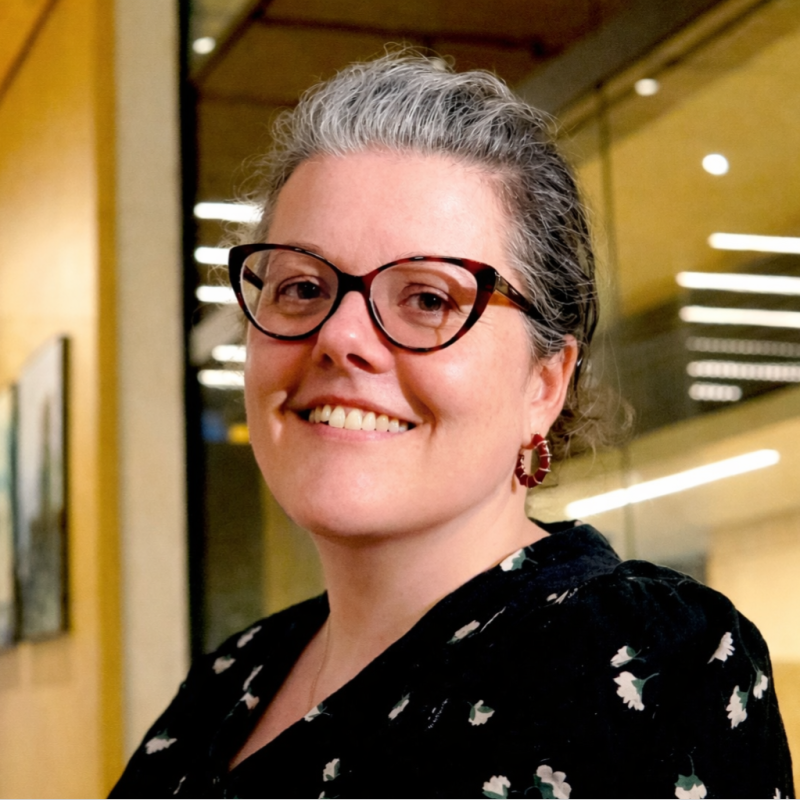
Anne Preston
Co-Investigator and Project Manager
Professor Anne Preston brings over two decades of experience in higher education, with a focus on interdisciplinary learning, curriculum innovation, and widening participation. At UCL, she has led major institutional developments, including the creation of over 60 interdisciplinary programmes and the design of pioneering place-based education initiatives. Her work centres on Education for Sustainable Development and community-engaged learning, embedding sustainability and inclusivity into teaching and research. She currently leads a work-based learning module on UCL’s flagship BA Media programme, connecting students with real-world practice. A champion of cross-sector collaboration, Professor Preston works closely with industry and community partners to foster socially impactful education, ensuring the project is both academically rigorous and meaningfully engaged with broader societal challenges.
Press and Collaborations
The project is open to collaborations with researchers, cultural organisations, and creative practitioners working in areas such as environmental humanities, game design, documentary film, and indigenous knowledge systems.
Enquiries relating to press, partnerships, or future development of the project are welcome. As the work progresses, there will be opportunities for talks, workshops, exhibitions, and further research collaborations.
Please contact Jamie Rhodes at University College London.